
Fin de l'Histoire
Comité Dans Paris
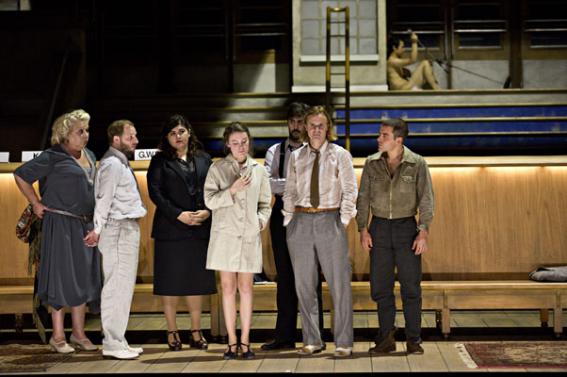
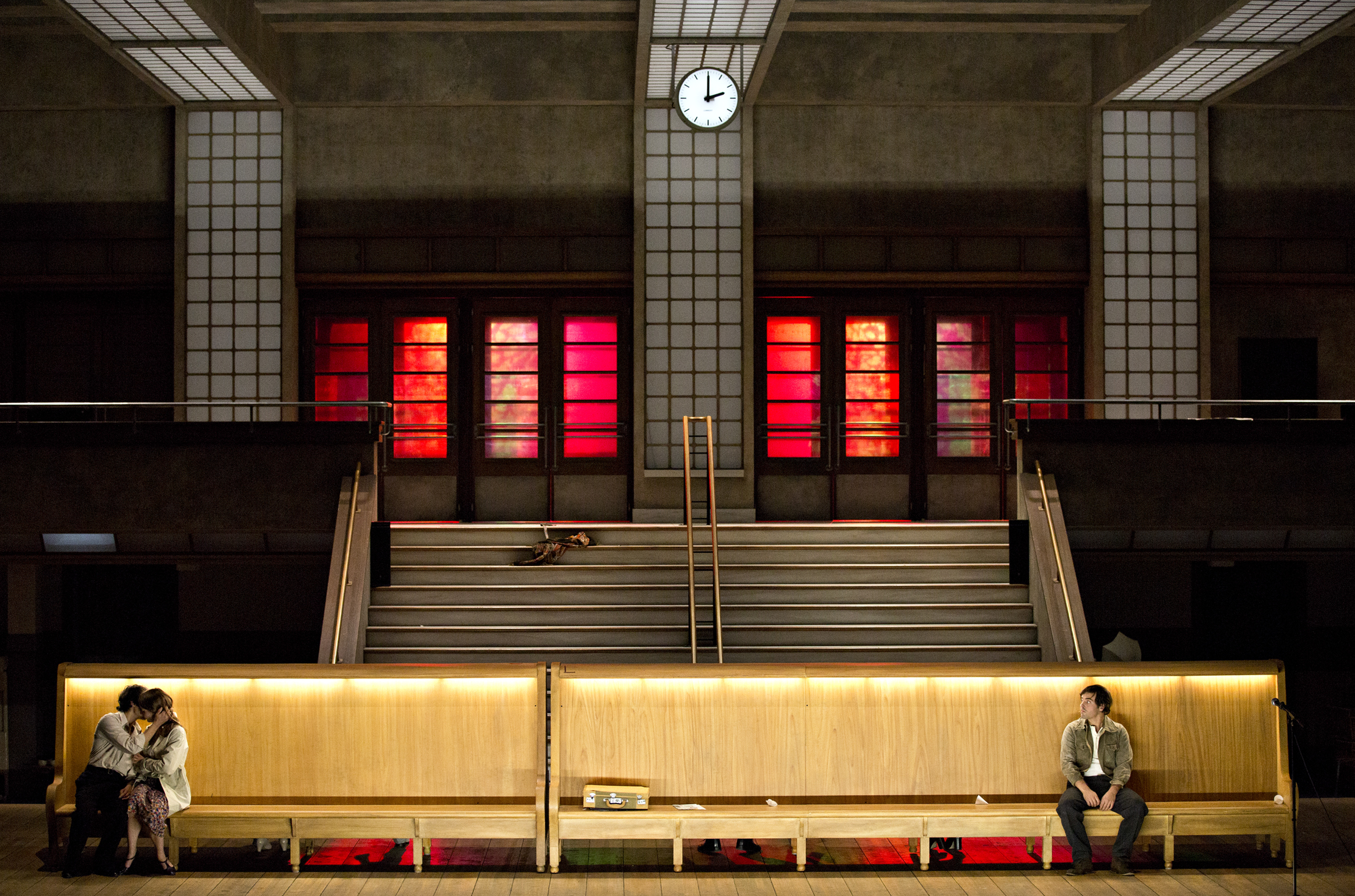
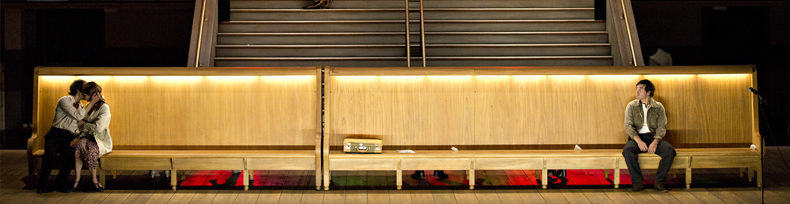
In the summer of 1939, as Poland prepares for the worst, young Witold must face his family, who laments on his social life, his irresponsibility, and his lack of enthusiasm for adult life. Witold remains silent, dreaming he reaches the place where history is made, where he believes he can change its course… Taking up the thread of an unfinished play by Gombrowicz, Christophe Honoré combines it with the Polish author’s diary and polemical writings, notably his famous Against the Poets. After Nouveau Roman, what better way to continue inventing a form of theatre that is impure, joyful and lively than Immaturity, a theme dear to Gombrowicz? According to him, the immature is the formless being, in the making, the permanently unfinished – the adolescent hidden in every adult, just waiting to emerge… True to his stage writing, Christophe Honoré will ask his actors to form two groups, first a sensual, loving, pure teenage trio, and then the adult clan, a frozen image of the Family, soon transforming into historical figures: Mussolini, Daladier, Stalin, but also philosophers: Hegel, Kojève, Derrida… not to mention, most recently, Francis Fukuyama, known for his theories on the end of history. They will contribute to the question posed: what does it mean today, for a generation spared by war, to have a place in history?
“I in my capacity as a poet want to return to the beauty of the human species, its wild, primal, embarrassing, unrelenting sense… its personal sense… Look, there where the child ends and the adult does not yet begin, there, from the fourteenth to twenty-fourth year, man is given his time to blossom. This is the only time of complete beauty in man. There is in humanity a refuge of immortal beauty and grace, but—too bad, too bad!—it is tied to youth. Oh, it is not enough to admire the beauty of abstract pictures—this beauty is not extreme—you have to live it through what you were, what you are not, through the inferiority of youth.”
Witold Gombrowicz, Journal, tome III 1961-1969
Created in 2015
Time: 2h45
Text by Christophe Honoré based on Witold Gombrowicz
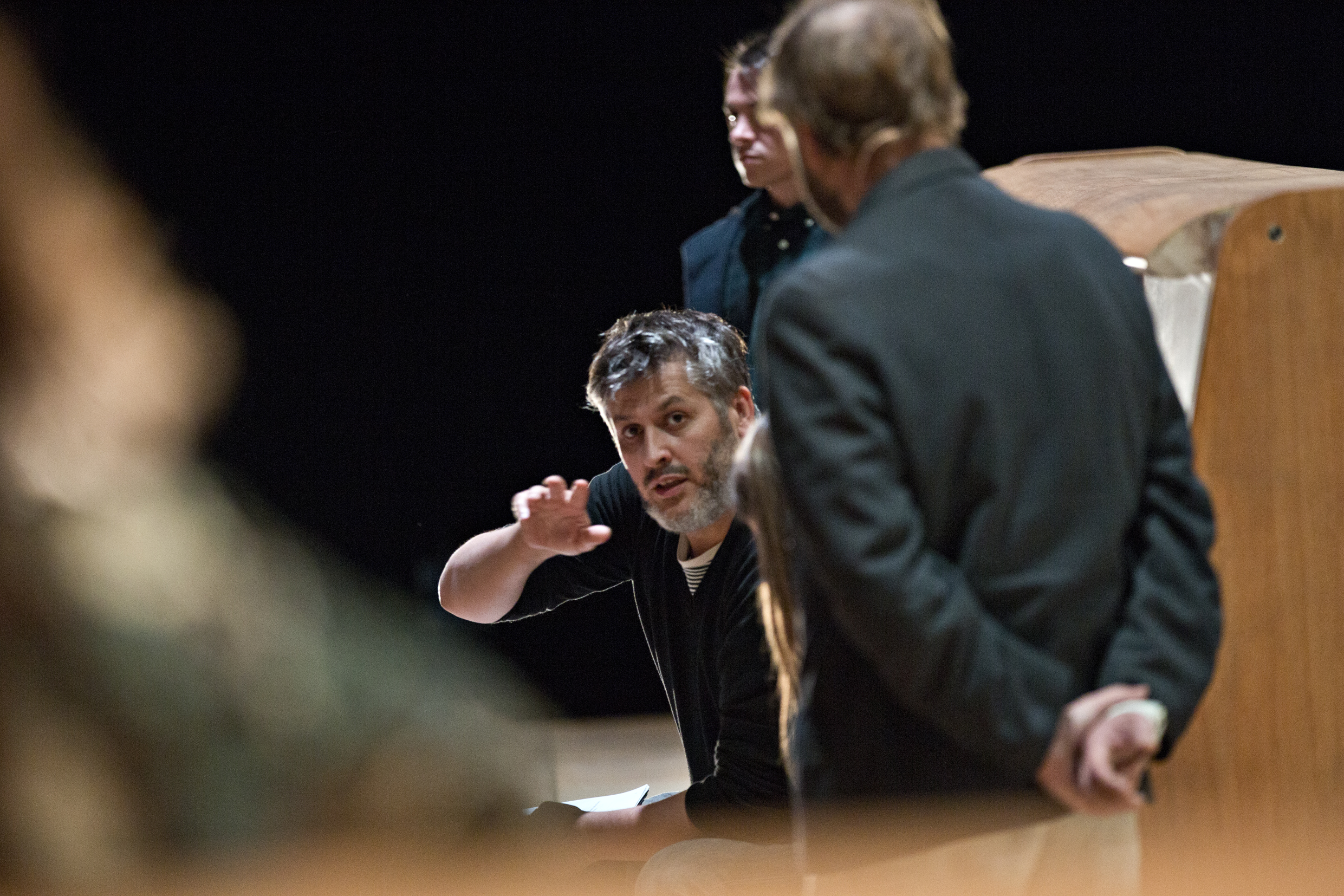
Directed by Christophe Honoré
With Jean-Charles Clichet, Sébastien Éveno, Julien Honoré, Erwan Ha Kyoon Larcher, Élise Lhomeau, Annie Mercier, Mathieu Saccucci, Marlène Saldana
Set design by Alban Ho Van
Lighting by Kelig Le Bars
Costume design by Marie La Rocca
Mask design and production Fanny Gautreau
Dramaturgy and assistant director Sébastien Lévy
Production CDDB-Théâtre de Lorient – CDN, La Colline – Théâtre national, Théâtre national de Toulouse Midi-Pyrénées, Le Grand T– théâtre de Loire-Atlantique, Maison des Arts de Créteil
with the artistic participation of the Jeune Théâtre National